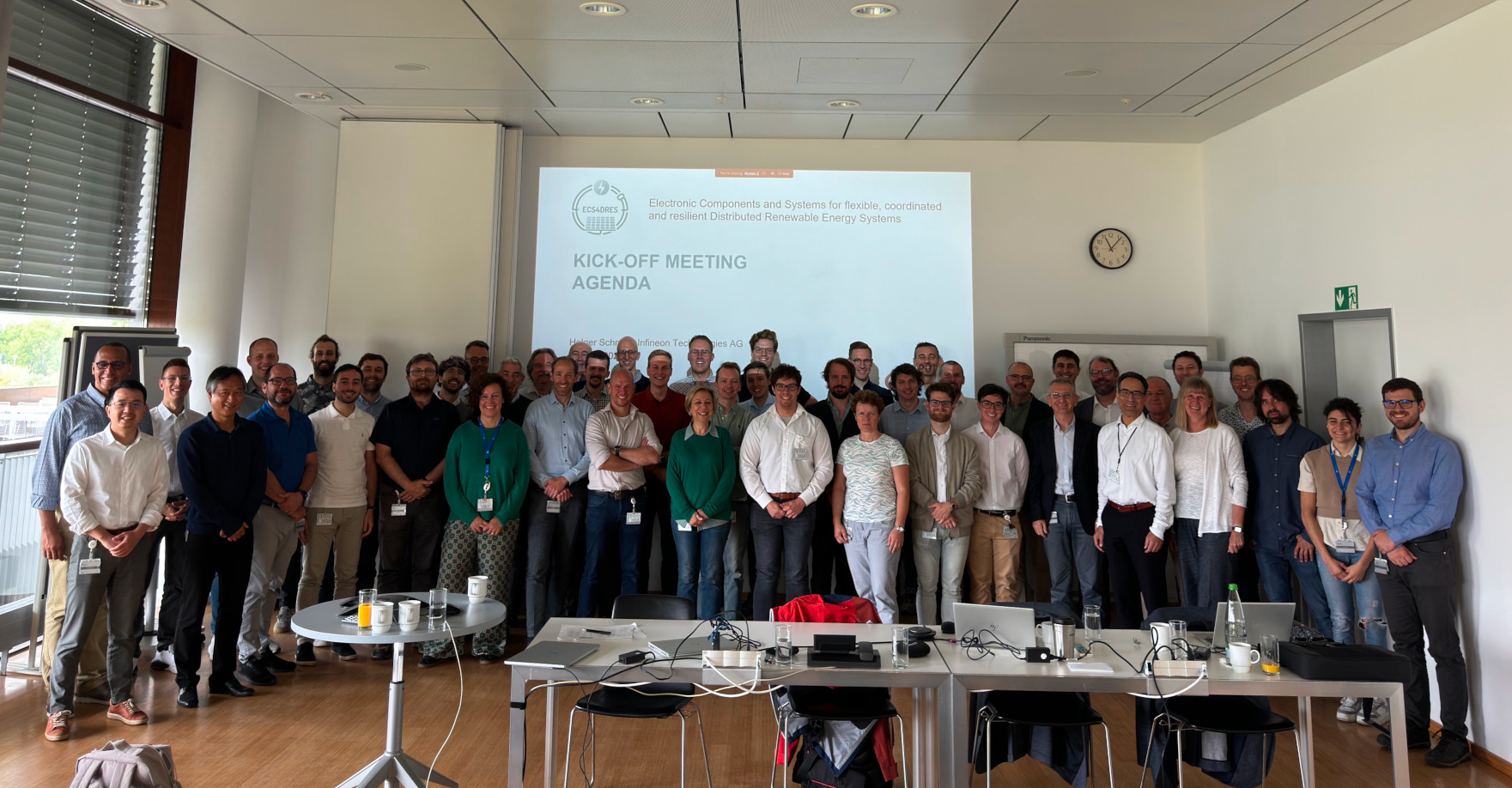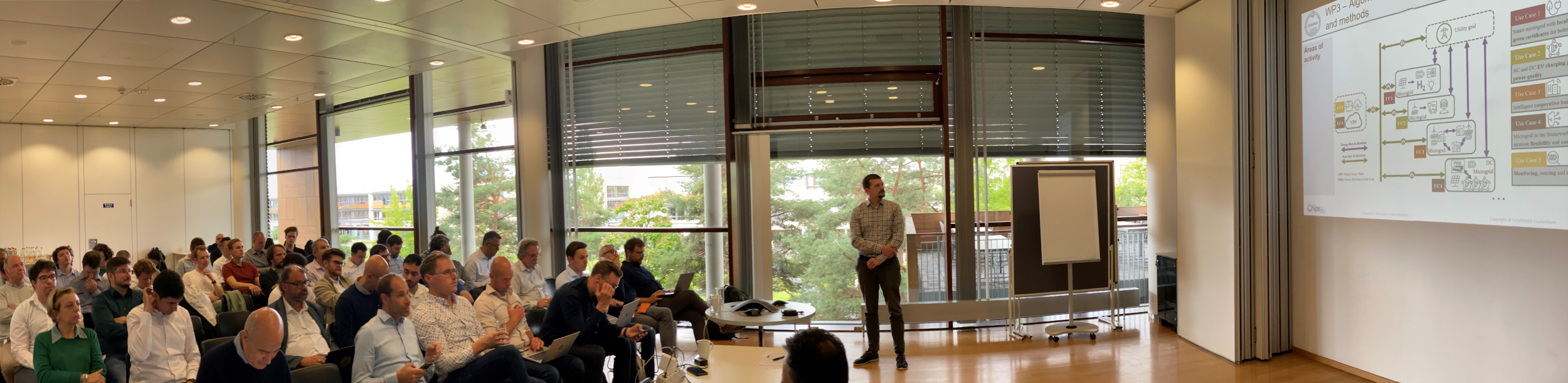
In the course of the ECS4DRES project THK conducts research on how to coordinate multiple controllable loads in low-voltage distribution grids in UC1.
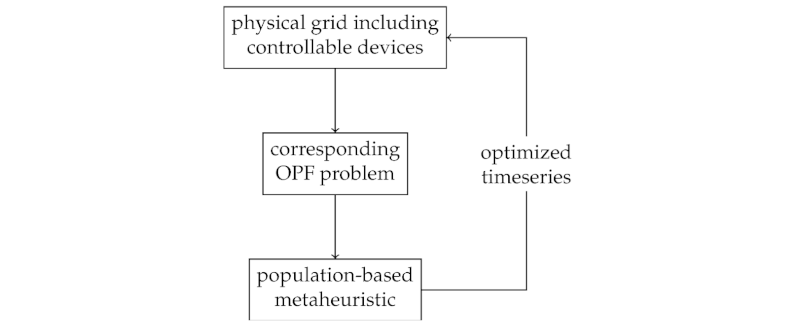
Each of those controllable loads might come with specific requirements. A typical approach is to formulate an Optimal Power Flow (OPF) optimization problem to capture the state and operation of the grid. The solution of this OPF problem will be an “optimized schedule” to indicate which controllable load might be operated with which power at which time step. However, such OPF problems can grow very complex and “classical” solvers might take very long to find solutions to the OPF problem. This might make it impossible to react to a change in the grid state in appropriate time. However, metaheuristic approaches might lead to faster solutions.
Therefore, existing literature has been reviewed for existing OPF formulations and for solution techniques using population-based metaheuristic solvers. This research led to the review “Optimal Power Flow Formulations for Coordinating Controllable Loads in Low-Voltage Grids: An Overview of Constraint Handling and Hyper Parameter Tuning When UsingMetaheuristic Solvers”. This review highlights some possible paths for future research: For example extended OPF formulations to include controllable devices inside households. But also research on the effects of constraint handling technique and hyper paremeter tuning on the performance of metaheuristic solvers. Or even research on automated methods to determine optimal values for hyper parameters.
Future research and developments of THK in UC1 will be based on those findings. Based on a given grid topology and controllable devices a corresponding OPF problem will be formulated and solved using a metaheuristic solver. The solution (optimized time series for controllable loads) can then be used to coordinate those controllable loads